What We Leave Behind
What we leave behind
Over the last two-or-so years, I’ve had more reasons to think about memory than I ever expected.
I lost my mother. I lost my father. I lost one of my closest friends. And in other ways, I lost people who were still alive.
I don’t mention that because I want sympathy. I’m mentioning it because it changed the way I look at things. Photographs that I once barely noticed became important. Old files I’d forgotten existed suddenly felt like little pieces of history. A bookshelf stopped being a collection of books and became a record of someone’s interests, personality, and life.
And I started thinking about something I probably should have thought about much earlier:
What happens to our memories when the people who created them are gone?
When Everything Becomes a Memory
It’s funny what becomes important once someone is suddenly not in your life anymore.
While my parents were still alive, my focus was always on photographs. Old photo albums that had been sitting on a shelf in the same closet for decades. An old shoebox filled with Polaroids. Little binders full of negative film. With me living in America and my family still in Europe, it took years to get them to sit down and painstakingly scan as much as they could and send it to me. Of course, the quality was nowhere near good enough for long-term preservation, think 233 KB JPEGs rather than 50 MB TIFF scans, but at least it was something.
They did what they could with what they had, and I was grateful for it.
Then I found myself in their homes, going through two lifetimes’ worth of stuff, and suddenly everything had meaning. Everything had some kind of memory attached to it. I couldn’t bring it all back to the States with me. I spent weeks just staring at things, unable to do what I was actually there to do: clean out their homes.
I was overwhelmed.
A handwritten receipt. A Christmas card. A CD or book collection. Letters. A piece of clothing from when I was a baby that they had held onto. A guitar pick pinned to the wall above a desk.
I didn’t know what to do with any of it.
And then there were their entire digital lives sitting on their computers. Who did they subscribe to on YouTube? Who did they support on Patreon? What websites did they visit? What music did they listen to? If they had spent time and money on something, it was important to them somehow. I should probably make a note of it. Maybe I’d want to come back to it later.
Friends offered to help, but I didn’t know how they could. They didn’t know what was destined for the trash and what should be preserved. There were simply too many memories, mine and theirs, mixed together in every room.
I wasted weeks.
But eventually, it was crunch time. I had to get back to the States and be with the family I still had left. Working my 9-to-5 job from Europe was no longer sustainable. I was exhausted, and then I still had to work from 3 to 11 p.m. on top of everything else.
Something had to be done.
I needed a plan, and I needed one fast.
What Could Be Saved
The fact was, most of what I wanted to preserve could not be preserved. I live halfway across the globe, and even if I had the space to take everything, I simply didn’t have the money to ship it all. So I started by photographing everything I could. Not just the things that seemed important, but the ordinary things too. How they lived. How the rooms were laid out. The paintings on the walls. The things they kept in plain sight because they meant something to them.
I took hundreds of photos. I’m sure I won’t look at many of them in the future, but at least I have them if I ever do. Maybe one day I’ll find a lamp similar to the one my dad used on his desk while he was recording a new guitar solo. Maybe I’ll want a new plant in my living room and find myself looking for the same kind my mom had next to her favorite chair. Those photos might come in handy.
I then moved on to mountains of paperwork. They had both kept their important documents in one place, so it was fairly easy to go on autopilot and scan everything, piece by piece. The really important documents I set aside. Photo albums, loose photographs, and film negatives went into another pile. I prepared four moving boxes that I would eventually ship back to the States. They would contain the things that absolutely had to be preserved. But not trusting shippers with something that important, I made sure I had digital copies of the documents, scans of some of the photographs, and pictures of everything else.
I unpacked and repacked those boxes several times, constantly reconsidering what belonged in them. Eventually, I settled on their contents, taped them shut, and shipped them off.
The rest of my time there was spent holding things, saying goodbye to things, and watching it all disappear into giant dumpsters. I took many more photographs along the way. Reducing two full lives to what could fit into four boxes and a collection of digital files broke my heart, but it had to be done.
The task was now to say bye to my friends, get home, process everything I had saved, and wait for those boxes to arrive.
Preserving What Was Left Behind
Fortunately, all the boxes arrived undamaged, but my initial plan of going straight to work preserving and securing everything inside went out the window. I was drained, depressed, alone, and honestly didn’t know what to do with myself. I needed some time to get my head on straight and get back to being myself.
I transferred the contents of the boxes into heavy-duty plastic totes and secured them in my basement, safe from whatever might put them at risk. While I felt good about finally having that stuff here, it was still mostly one-of-a-kind. There weren’t going to be replacements if something happened to it.
A few months passed, and while I was far from okay, I finally decided to sit down and get to work. Photos were up first. Since this was going to be the last time these photos would ever be scanned, I wanted to make sure I did it right. I upgraded my flatbed scanner and purchased a dedicated film scanner as well. My Canon CanoScan LiDE 300 had been good enough until then, but I replaced it with a Canon CanoScan LiDE 400. It’s not the best scanner in the world, but it was meaningfully better than what I had before, so it was good enough. For film, I went with the Plustek OpticFilm 8300i. Both scanners, paired with the fantastic VueScan software, got the job done beautifully.
The scanning project took several months, on and off. If you find yourself in a similar situation, keep in mind that looking at some of these photos hits hard. Sometimes I had to step away and take a break. It’s also incredibly boring work, and doing it for hours day after day will drive you nuts after a while.
With every photo and piece of film now digitized, it was time to sort through everything. Many of the photos I scanned had already been scanned once before, and in many cases I also had the original film negatives. When you’re dealing with this kind of volume, you’re going to end up with a ton of duplicates. That’s just how it is. I’ll eventually have to scan everything for duplicates and keep the highest-resolution versions, but that will take time. For now, getting everything archived was the priority.
All of it was hashed with IntegrityChecker, burned to Blu-ray discs twice, with one copy stored in the safe, and uploaded to both my NAS and off-site storage. Sorting would have to wait.
Next up were the stacks of ZIP disks, hard drives, burned CDs and DVDs, and all of their other digital stuff. I’d say I recovered about 95% of it from the original media, and that too is now safely stored in multiple locations. My mom was a writer and my dad was a musician, so whatever they had stored should contain at least some of their work. Again, sorting it all will be a down-the-road concern.
I also imaged their computers and external hard drives while I was in Europe and uploaded all of that to my NAS back in the States. Thank God my internet connection, servers, NAS, and VPN held up for months without skipping a beat. Many terabytes of data were transferred and validated. The goal is to eventually recreate my dad’s computer setup here, restore his data, and try to make sense of his Cubase projects.
All of the scanned documents were processed with OCR, named, sorted and archived. If I need to find something later that should be easy to do with a simple search.
You guessed it. That’s a future Jay challenge.
Bringing the Past Back to Life
With all the box contents processed and dealt with in their respective ways, the mission was done. I had been in Europe for a few months, arriving back in the States at the end of November 2025, and it was now June 2026. All in all, it had been one hell of a project, but it was finally done.
At the time of writing this, it is early October 2026, and I still haven’t sorted most of the data. I don’t know how long that will take. I still can’t look at some of the photos without feeling the same way I did a year ago, so I keep kicking that particular can down the road.
Instead, I decided to start with the photos that predated me, or showed me as a very young kid. It meant I could avoid looking at my parents as I knew them and the memories we made together, and I found those much easier to work with. And I decided to have some fun with it.
Seeing photos of all the vacations my parents and grandparents took, the concerts they attended, the places they visited, and the events they went to was fascinating. But I wanted to do more than simply scan the photographs. I wanted to figure out the stories behind them.
1998, vacation to the Czech Republic.
I remember most of this trip. I remember this river and this waterfall.
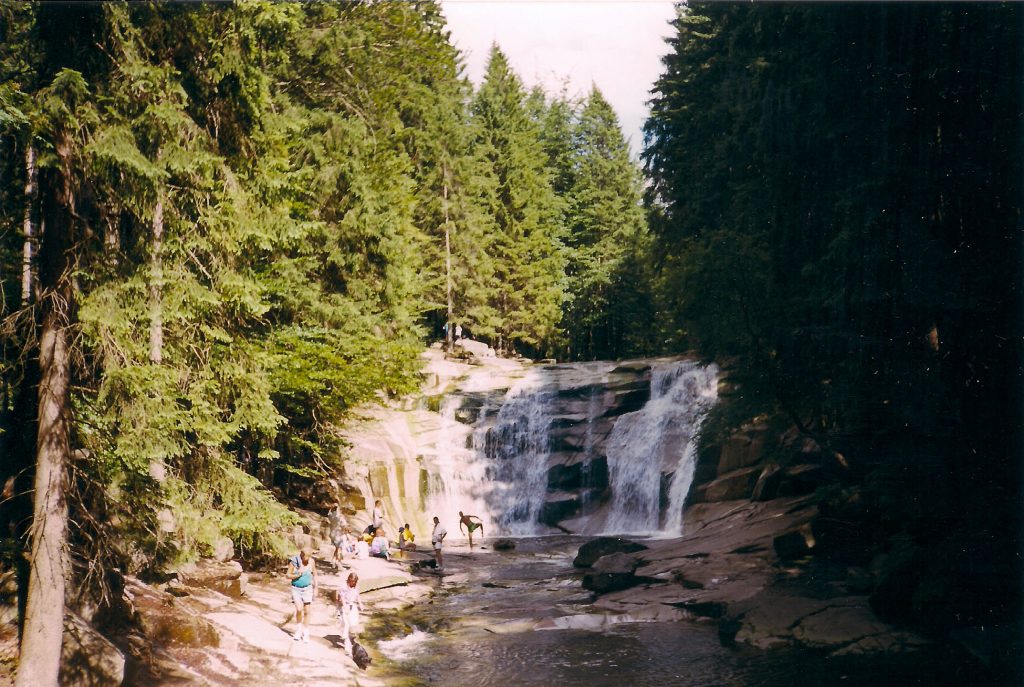
With the help of AI and some other nifty online tools, I was able to identify this as the Mumlava Waterfall in Harrachov, down to its exact GPS coordinates. By processing all of the photos from this vacation, I can now reconstruct much more of the trip: This is the cable car ride up Čertova hora (Devil’s Mountain). The building in this photo was Hotel XYZ, which was demolished in 2002. The shadows and foliage suggest this photograph was taken in July.
AI tools have been incredibly useful for piecing these trips back together.
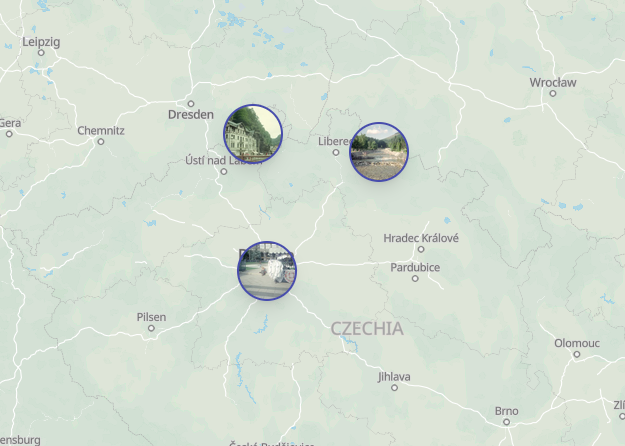
These albums now live in a self-hosted instance of Immich, where I can add descriptions, map coordinates, and other information. I can share them with family and friends anywhere in the world. It’s great.
Recreating these trips almost thirty years later with modern tools isn’t just fun. It’s healing.
I’ve been able to apply the same process to photographs from Greece, Italy, and England taken in the 1970s. By identifying enough landmarks (which, after all, are what people tend to photograph) I can piece together much of the trips my family took before I even existed.
My dad had a passion for photography for most of his life. Among the things I found was an album from some kind of concert he attended. I was able to determine that it was the 7th Newport Jazz Festival in 1971. Naturally, I wanted to know what the concert was like, so I went looking and found a recording on YouTube.
Imagine my surprise when, four seconds into the video, I saw my 19 year old dad sitting in the audience!
While there is a lot more work to do, I know that when I’m finally finished, I’ll have more than just a collection of scans. I’ll have the stories, the locations, the context, and the little details that turn a photograph back into a memory. In some cases, I can almost be there myself.
I’ve started reading some of the Jack Vance books my dad was always quoting, and listening to some of the music my parents were into. And yes, I even have a few plants now that had been in the house all my life growing up but that I never paid much attention to, sitting in my own living room.
My dad was always too nervous to publish his own work. He did it for himself, and perhaps that’s all he ever needed from it. But when the time comes, I intend to finish his projects and put them online so that other people can enjoy what he created. That’s something I can do for him now that I couldn’t have done before.
My son plays the piano, and my dad loved the idea of working my son’s piano playing into some of his songs someday. While my dad is no longer here to see it happen, I have all of his projects, and I will make sure some of my son’s piano playing is added to specific songs before I release them. In doing so, I’ll be fulfilling something my dad wanted to see happen.
I have a complete catalog of my parents’ CDs, records, and books because of all the effort I put in while I was in Europe, and that’s already paying off. I’m not just preserving these things anymore. I’m actually using them, listening to them, reading them, and living with them. In a small way, they’re becoming part of my life again.
Preserve It While You Can
Now, I could write about the technical details of how to digitize, archive, and preserve just about anything, but that isn’t really the point of this article. I want to help if you are going through something similar and feeling overwhelmed, or perhaps encourage you to start these efforts now, rather than when it’s too late. Preserve the photo albums while the people in those photos are still alive. Go through them together. Ask questions. Record their stories and their version of events as you look through them. That information may be gone forever once they are no longer in your life.
The digitization and archiving of documents, photos, creative work, and everything else should be done now. It protects that information for the people who own it today through proper backups, while also making it far easier for you or someone else to understand and preserve it when the time comes.
This whole experience has also made me realize that someday, my son, and whomever else is left to deal with my affairs, will have to sort through what I leave behind. I’ve spent most of this year purging junk from my home. Things I haven’t touched in a decade or more, random stuff I kept simply because I had it. But most of my clutter isn’t physical. It’s digital. At more than 60 TB today, the amount of data someone will have to sort through by the time I die could be staggering.
If he wants to, will my son be able to find my photos? Will all of the passwords and keys to my digital life be easy to locate in a password manager? Will important documents be scanned, organized, and easy to understand? Are all of my optical discs cataloged and easy to search? I’ve been working for months to clean up my digital life, with one question constantly in the back of my mind: If I’m gone tomorrow, can the people I leave behind find everything they need and want in this digital jungle?
It’s not a particularly pleasant thing to think about. But if I can make an already difficult time a little easier for my son, then the effort is worth it.
I used to think preserving things was about saving objects. Now I think it’s about saving the pieces of people that would otherwise disappear with them. A photograph, a letter, a recording, a song, a box of old documents—they all tell a story. Sometimes they tell a story that nobody else can tell anymore. We don’t get to choose when we’re going to lose the people we love, but we can choose what we do with the things they leave behind. And maybe the best time to start preserving those things isn’t after someone is gone. Maybe it’s while they’re still here, sitting beside us, telling us the stories behind the photographs.
2 thoughts on “What We Leave Behind”
Αt least you have memories,οr rather, you have built memories
Nowadays, few people understand it.
Thank you for sharing your story, Jay.
Not only is it important that everyone understands this, but I think it’s very good for you that you’ve shared it. I am most certain that your parents are proud of you, even now, in that next place, and will always be proud of you, for all of the good things that you put out into the world, for others to grow and learn. Keep going.
My deepest sympathies. I wish you and yours all the best.
~ MJ